
Interior painting for homes and businesses in Spartanburg, Boiling Springs, Valley Falls, Inman, Greer and Greenville.
How the work is scheduled
Interior jobs happen in occupied buildings, so the schedule matters as much as the finish. Project sequencing and scheduling are coordinated during the estimate and planning process, so you know which part of the house is in use and which is not, rather than everything being opened at once.
Dates come from the estimate, not from a call center, and if something changes you hear it from us rather than finding out on the day.
Preparation
Furniture is moved clear of the work and covered with plastic sheeting; flooring is protected across the room. Walls are inspected before they are painted: imperfections spackled, sanded or primed, gaps in trim and molding caulked, patches primed before the finish coat so the repair does not read through it later.
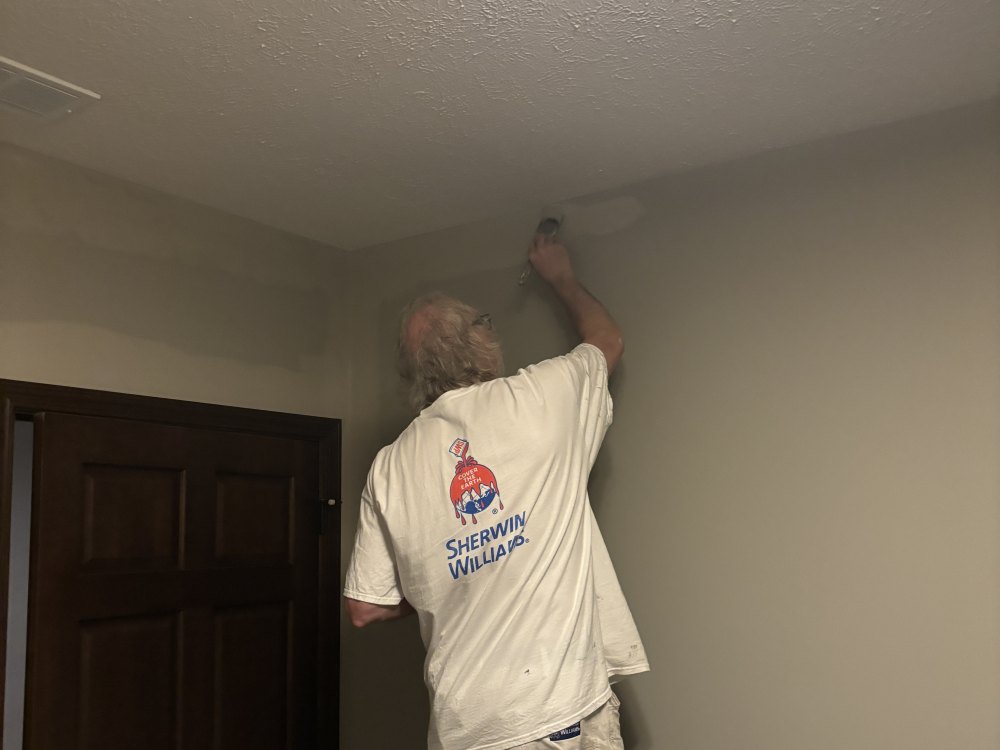
Then brush and roller: sharp cut-ins at the ceiling line and the trim, even texture across the wall. We use Sherwin-Williams products.
Rooms and surfaces
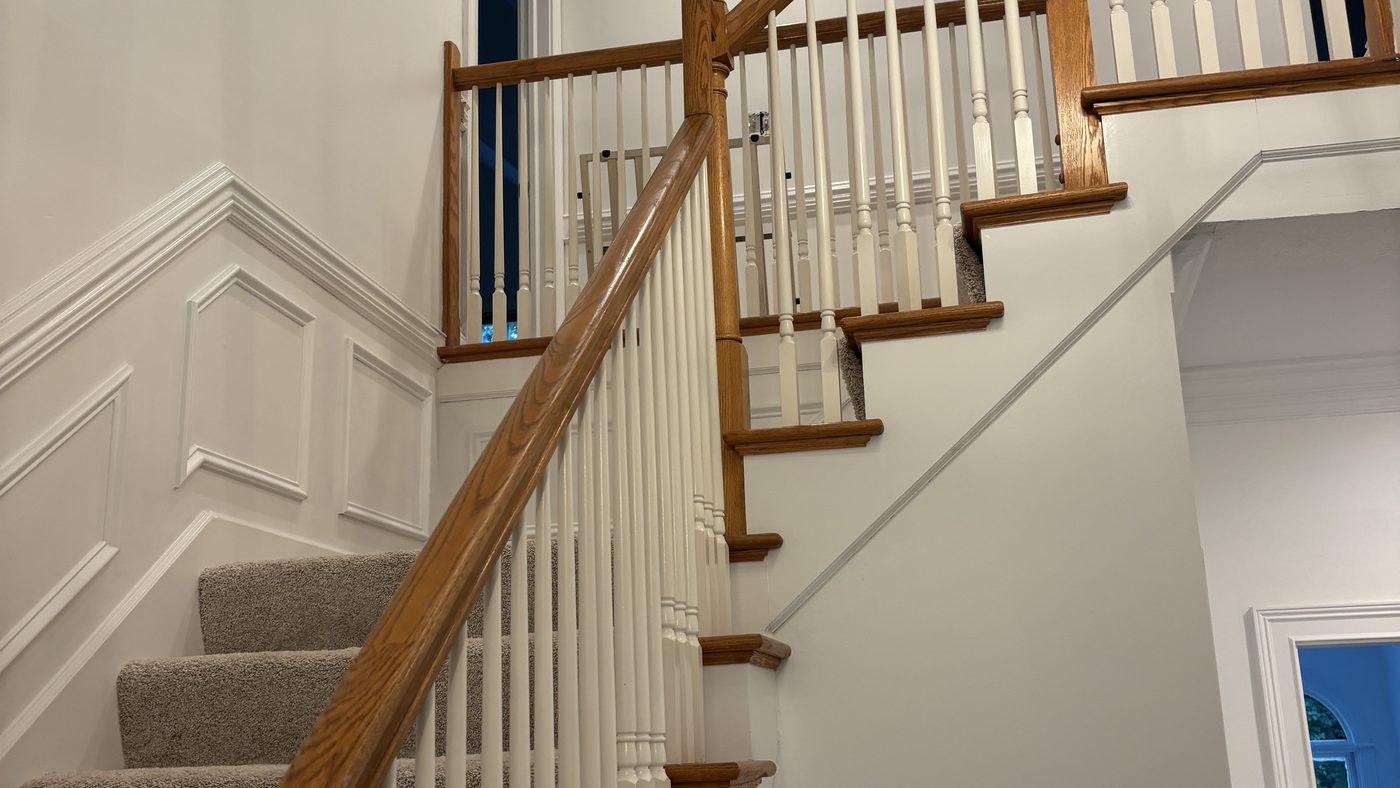
Walls and ceilings, trim and baseboards, doors and frames, window casings, crown molding, stair rails and spindles. Drywall and plaster both, and woodwork that has been painted before.
Kitchens, bathrooms and laundry rooms ask more of a finish than a bedroom does. In a humid climate that is worth thinking about twice: a finish that wipes clean and tolerates moisture earns its place in those rooms, and hallways take the knocks in any house.
Ceilings, trim and the order of the work
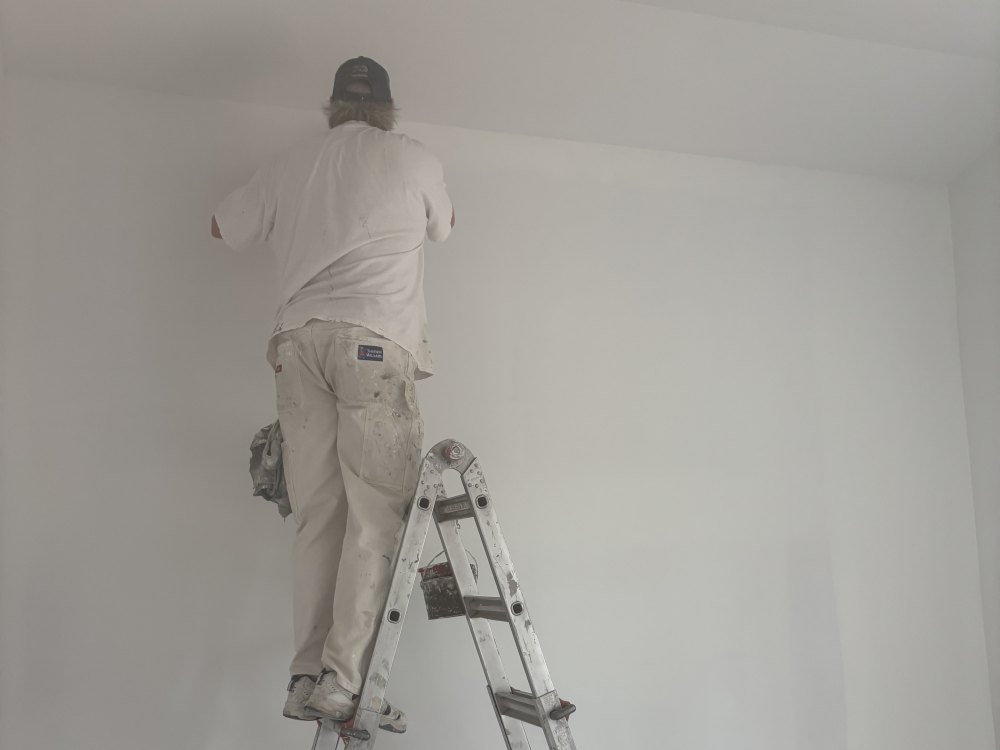
A room is usually painted from the top down. Ceilings first, then walls, then trim, so that anything that drops or splatters lands on a surface still due to be coated rather than on a finished one. It is a small thing that saves a lot of touching up.
Textured ceilings, the sprayed kind common in houses of a certain age, are worth raising at the estimate. They drink more material than a flat ceiling, they cannot be rolled hard without pulling the texture off, and where one has been patched the repair rarely matches until it is coated. None of that is a problem, but it changes what the room takes.
Trim and doors are a separate decision from the walls, and one worth making deliberately. Freshly painted walls next to tired trim tend to make the trim look worse than it did before, so it is common to do both at once even when only the walls prompted the call.
Coats, and why the number varies
How many coats a room needs depends on the color underneath, the color going over it, and the product’s own coverage. A close tone can sometimes cover in one; a strong change usually cannot, and a tinted primer is often a better answer than an extra finish coat. We will tell you what we expect a room to need when we quote it, rather than working to a fixed number.
Humidity stretches drying times, so recoating too soon is worth avoiding here more than in a dry climate. That shows up in the schedule rather than in the price.
What affects the price
The number and size of the rooms, ceiling height, the state of the surfaces, how much preparation is needed before painting starts, and the materials chosen. Trim, doors and ceilings are separate decisions from the walls and change the number considerably.
Estimates are free and carry no obligation. Request an estimate, or read our interior process in full. You can also see cabinet painting in Spartanburg or everything we do in Spartanburg.