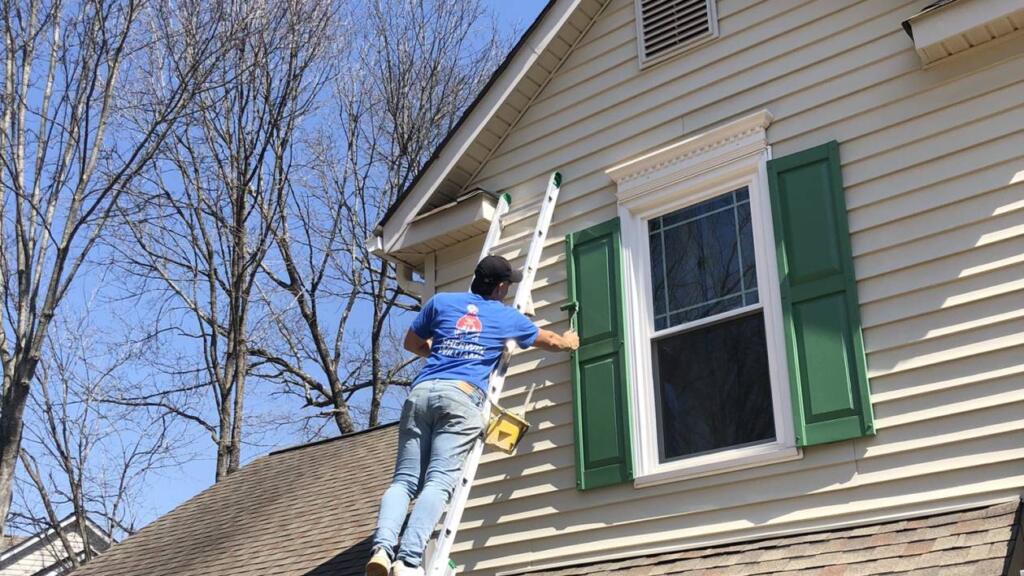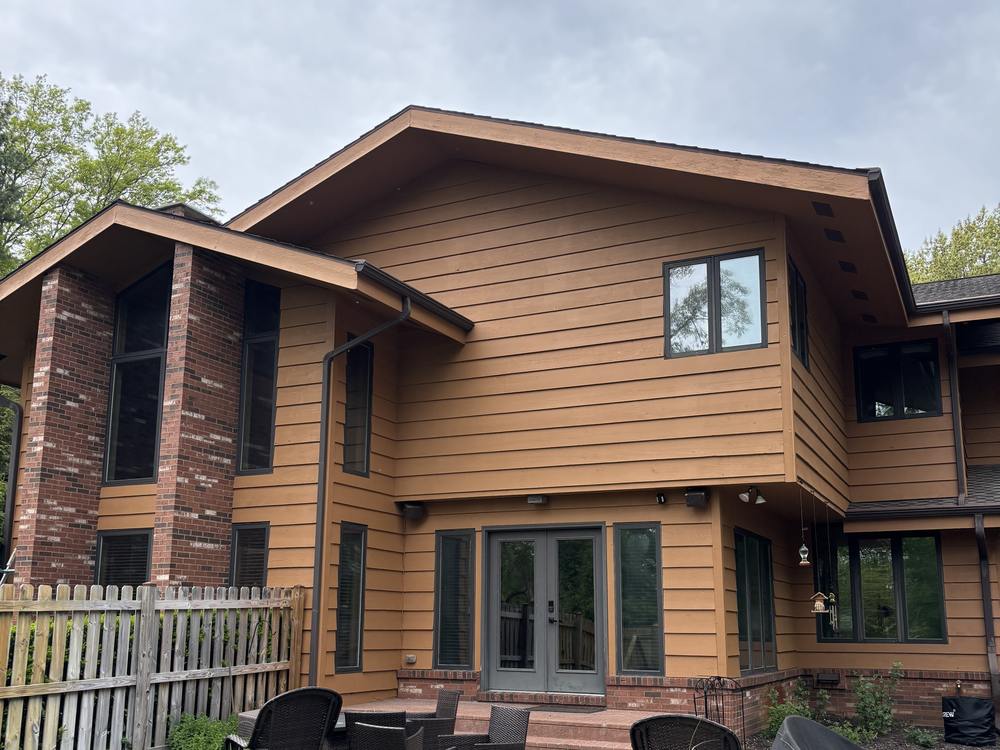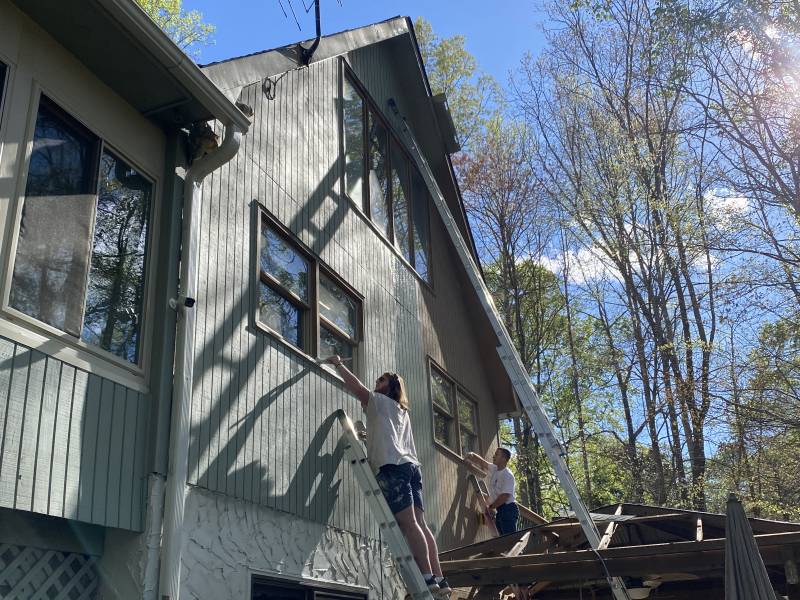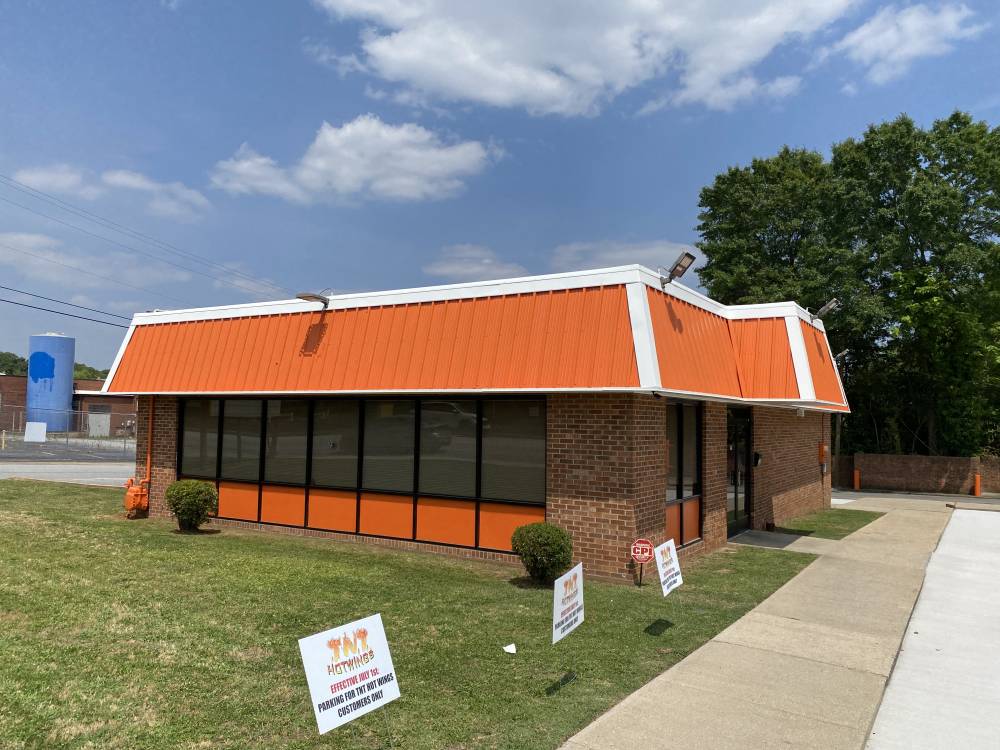
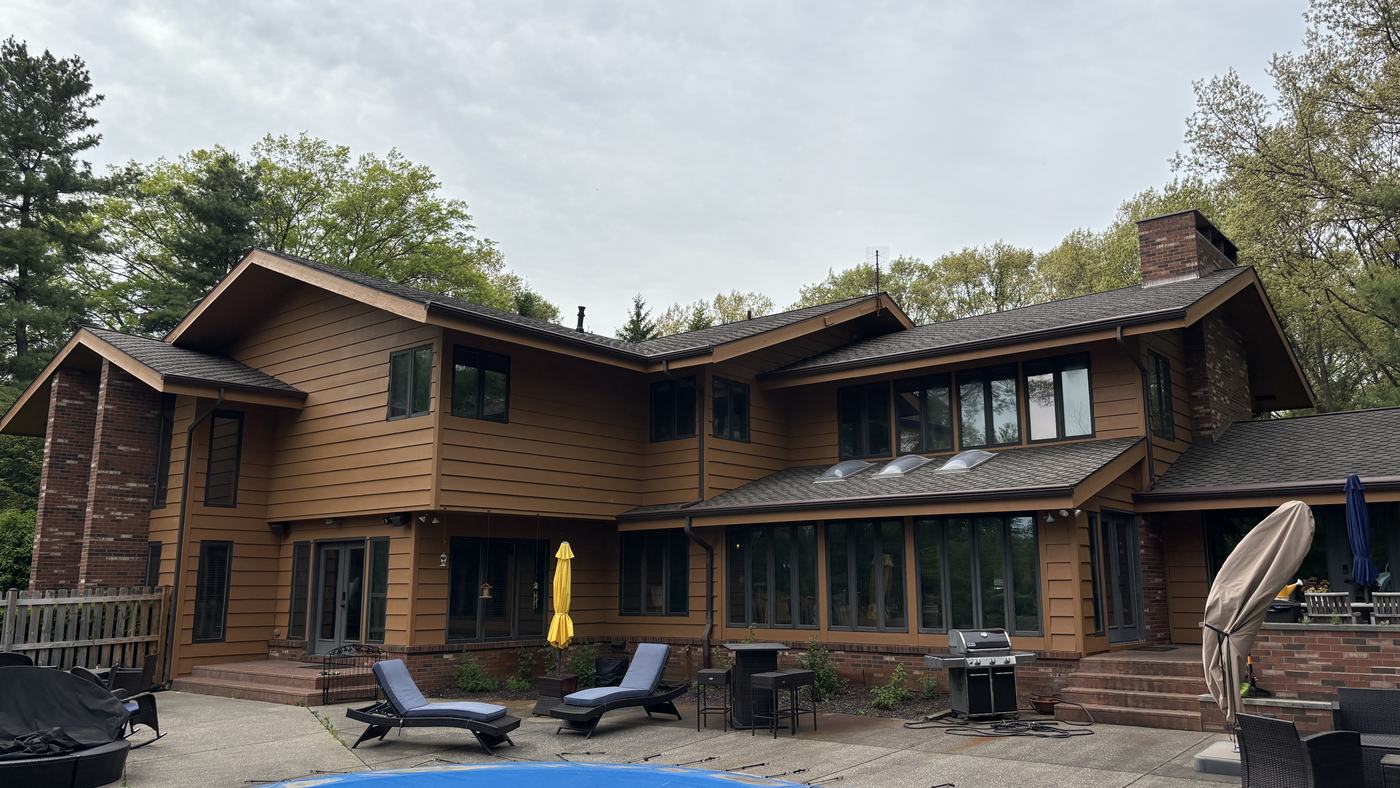
A two-story house in Elkhart with horizontal wood siding, finished brown against its red brick chimneys and dark window frames. The photographs were taken on one visit and cover the front, the patio elevation and the rear.
Wood siding under mature trees is a particular set of conditions: less sun and more damp on the shaded elevations, which is where the failures start and where a repaint has to be judged from rather than from the side that faces the street.
How we repaint an exterior
The general process, on any house rather than this one, and it is mostly preparation. The elevations are power washed and treated with TSP to take off what has grown on them as well as what has settled. Everything no longer bonded is scraped back. Exposed wood is primed, joints and gaps are caulked, and anything soft is identified and raised with you before it is covered.
Only then does color go on. In northern Indiana that order is the whole job: paint here fails because water gets behind it and freezes, and every winter lifts the coat a little further off the wood, so what happens under the finish decides whether you are repainting in ten years or in three.
What to expect if you want this
A whole-house exterior usually runs to several days and depends on the weather, so the schedule is a range rather than a date. Drying time between steps is not padding; it is the reason the work lasts, and it is why an exterior booked at the very end of the season is a worse job than the same one booked in the spring.
The price comes from the condition of what is there, not the square footage. Two houses the same size can be very different jobs once somebody is up a ladder looking at the fascia, which is why every exterior estimate is a visit and why it is free.