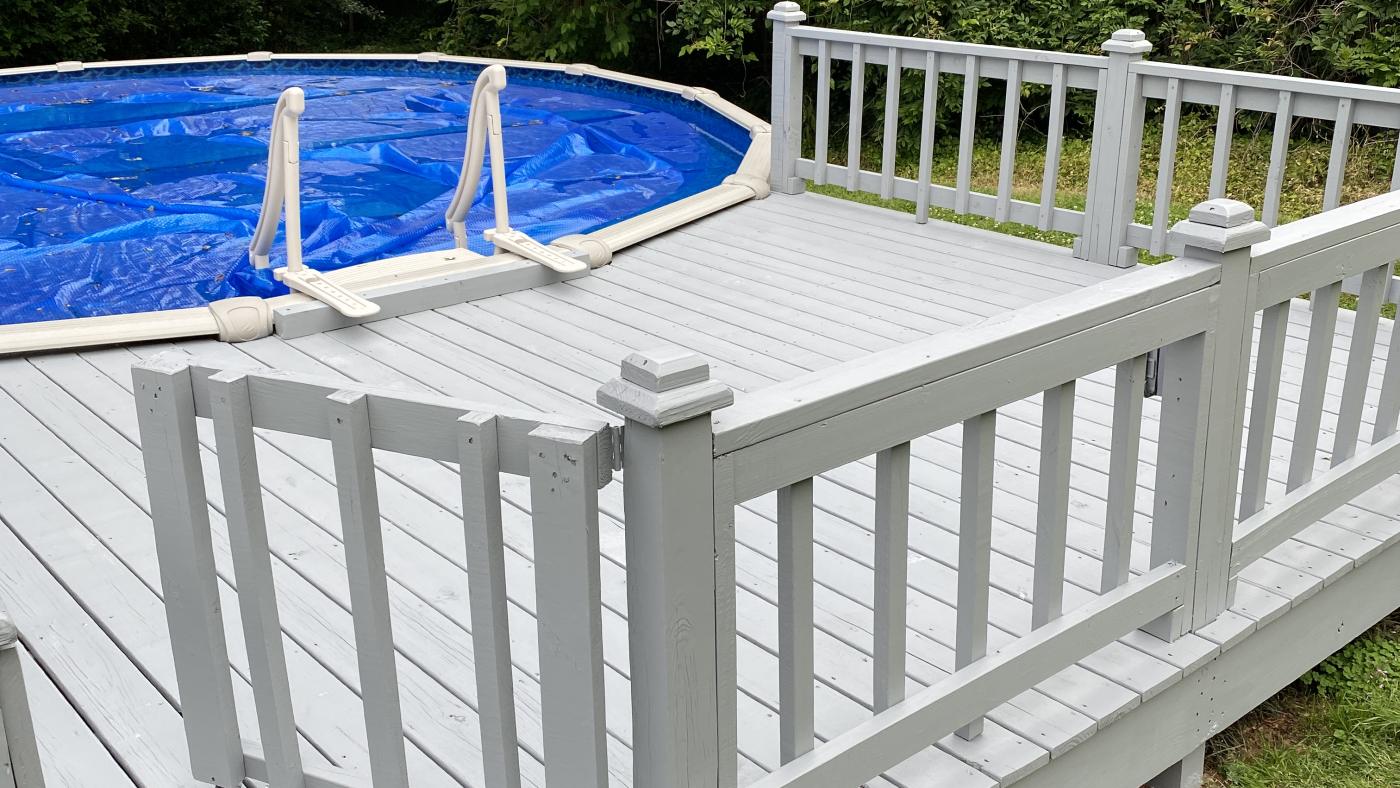
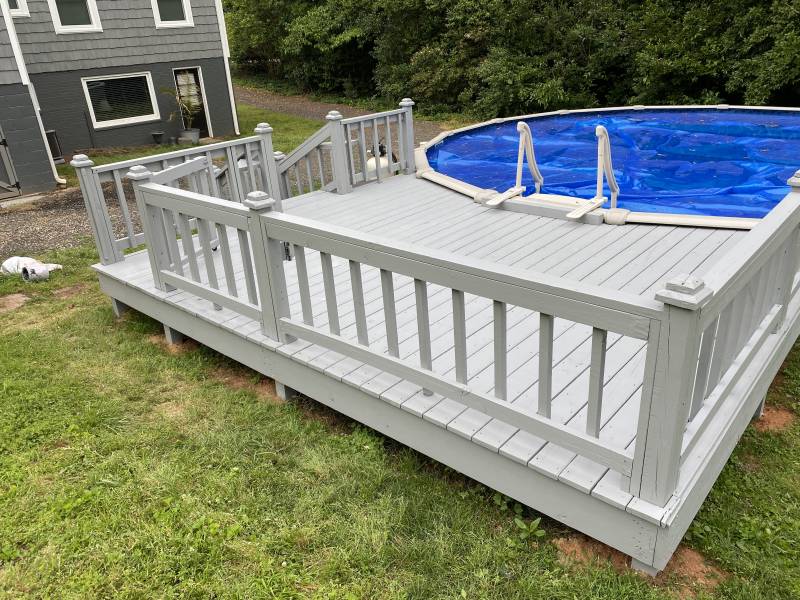
Decks, railings, steps, fences, porch floors and exterior trim across South Bend, Mishawaka, Granger, Osceola and Roseland: stained, or painted, depending on the wood and on what you want from it.
A deck is the hardest-working painted surface on a property. It takes rain, snow, moisture, sun exposure and seasonal wear across the year, and unlike a wall it is walked on. Boards gray, fasteners lift and surfaces cup long before the structure has anything wrong with it, and a coat applied over that has little chance of holding, however good the coat is.
Stain or paint
Stain soaks in, shows the grain and wears back gradually. Paint sits on the surface, covers more, and gives a wider color range: better on rails and risers, harder to keep on a walked-on board that flexes.
The difference that matters is how each one fails. A stain thins where the traffic is and grays back, so recoating is a wash and a fresh coat rather than a rescue. Paint holds a film, and when that film finally lets go it peels, which means scraping the whole surface back before anything else can happen. Neither is wrong; they are different maintenance cycles, and it is worth choosing the one you would rather live with.
A common answer is both: stain on the deck boards where feet go, paint on the railings, spindles and risers where the color shows and nothing walks. We will say which we would use on your deck and why, and the choice stays yours.
Washing, and then waiting
Everything gets washed, and then it gets left. Timber that looks dry on top can still be wet a few millimeters in, and a coat applied over that can lift within a season, which is a common way a deck job goes wrong. The drying is not padding in the schedule; it is part of the work.
How long depends on the weather and on the timber. It is a common reason a deck job takes longer than a homeowner expects, and it is not a step worth compressing to fit a weekend.
What we look at while it dries
While it dries we look the boards over: lifted fasteners, splitting, anything soft underfoot. You will hear about anything we find.
A finish is not a repair. It will not stiffen a springy board, hold down a fastener that has worked loose, or stop rot that has already started. It will cover all three, which is worse, because it hides them until the next time somebody stands on that spot. Where a board needs replacing before coating, we will tell you, and we would rather say it before the work starts than after.
Season and recoating
Deck work is warm-weather work here. The surface needs to be dry through, temperatures need to hold while the finish cures, and a cold night on a fresh coat can undo an afternoon of good conditions.
Horizontal surfaces in northern Indiana take more punishment than anything vertical: standing water, freeze and thaw, and full summer sun on the same boards. Expect to maintain a deck on a shorter cycle than you would a house exterior, and expect the boards to need it before the railings do.
What affects the price
Square footage, and then the railings. Spindles are slow and there are usually more of them than anyone expects. After that, the condition of the timber, how much washing and sanding it needs, and whether steps and the underside are included.
Stripping a failed paint film off deck boards is its own job, and a deck in that condition costs more than a gray but sound one of the same size.
We use Sherwin-Williams products, and the estimate is free. Request an estimate, or read more about decks and staining. You can also see exterior painting in South Bend or everything we do in South Bend.