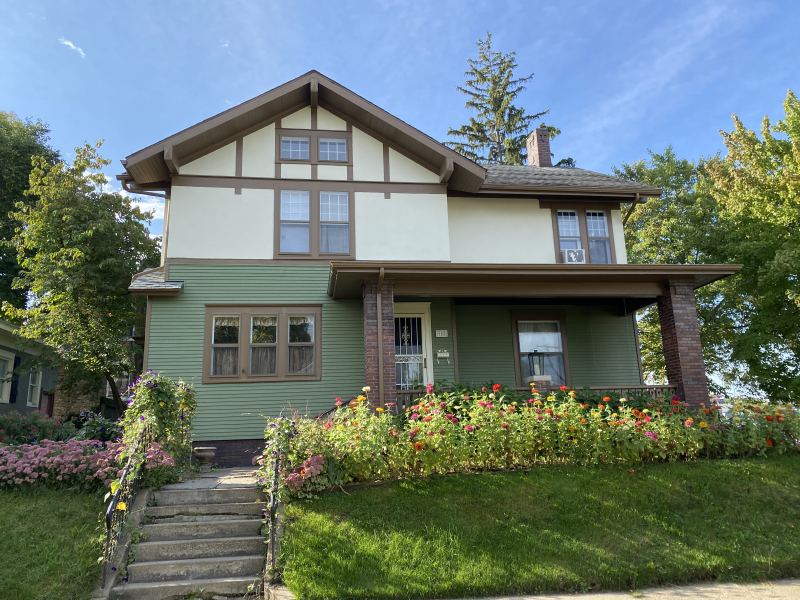
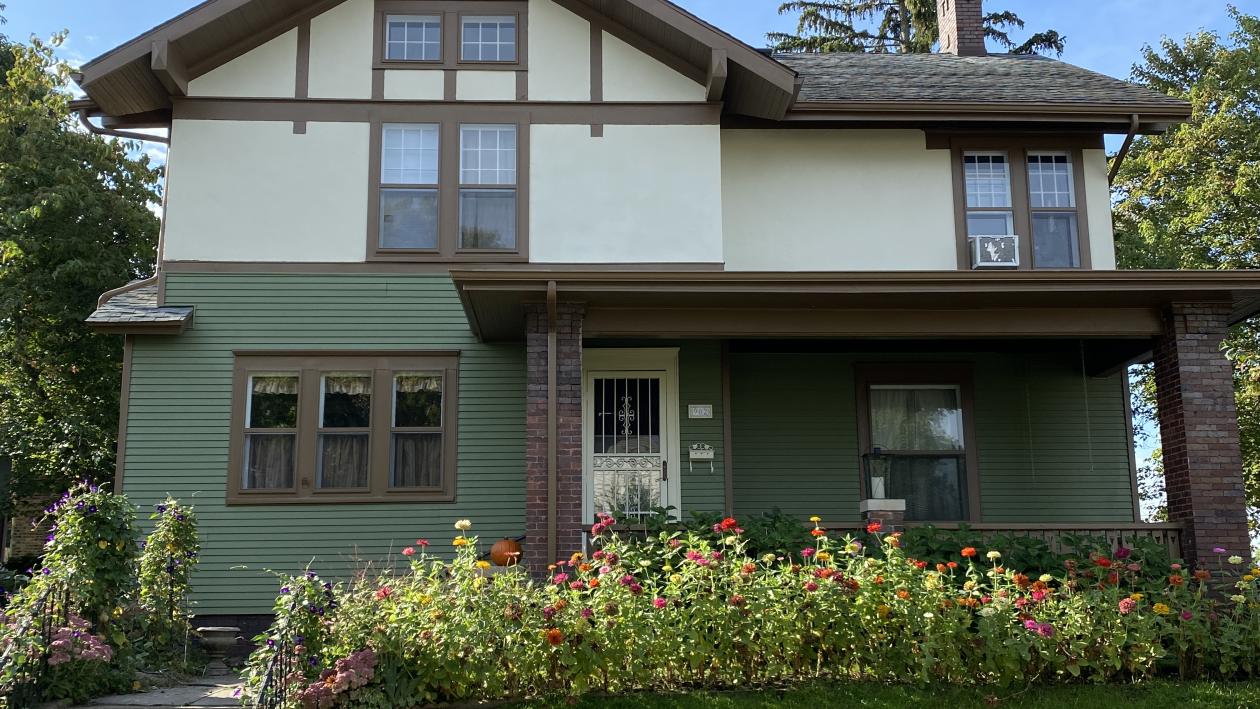
A two-story craftsman finished in three colors: sage green on the lap siding, cream on the gable stucco, and a dark brown on every casing, bracket and rail. The brick porch piers were left alone.
Three colors is the part that takes the time. Every line where one meets another is cut in by hand, and on a house of this age there are a lot of them: window casings, the frieze under the eave, the half-timbering in the gable, the porch rail and its spindles. The siding itself is the quick part.
How we paint an exterior
The general process rather than this house in particular. Everything gets washed first and treated with TSP, because paint bonds to a clean surface and to nothing else. Loose and failing coating is scraped back to something sound, exposed wood is primed, and open joints are caulked so water has nowhere to sit. Plants and fixtures are covered before any of that starts.
Then it is sprayer, brush or roller depending on the surface, with proper drying time between coats rather than a second coat chased onto a first that is still soft.
What to expect if you want this
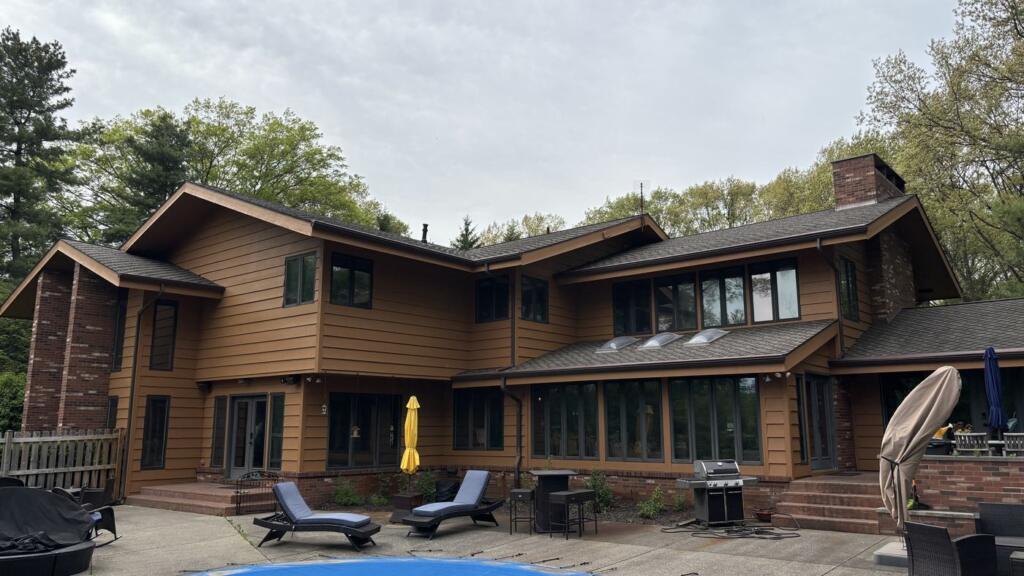
An older house with this much trim is priced by the amount of edge rather than by the square footage of wall, which is exactly the thing that cannot be judged from a description over the phone. It is also the thing a walk-around settles in ten minutes.
If any of the woodwork has gone soft we will tell you at the estimate rather than paint over it, because a coating on rotten trim buys a season and costs you the repair twice.