
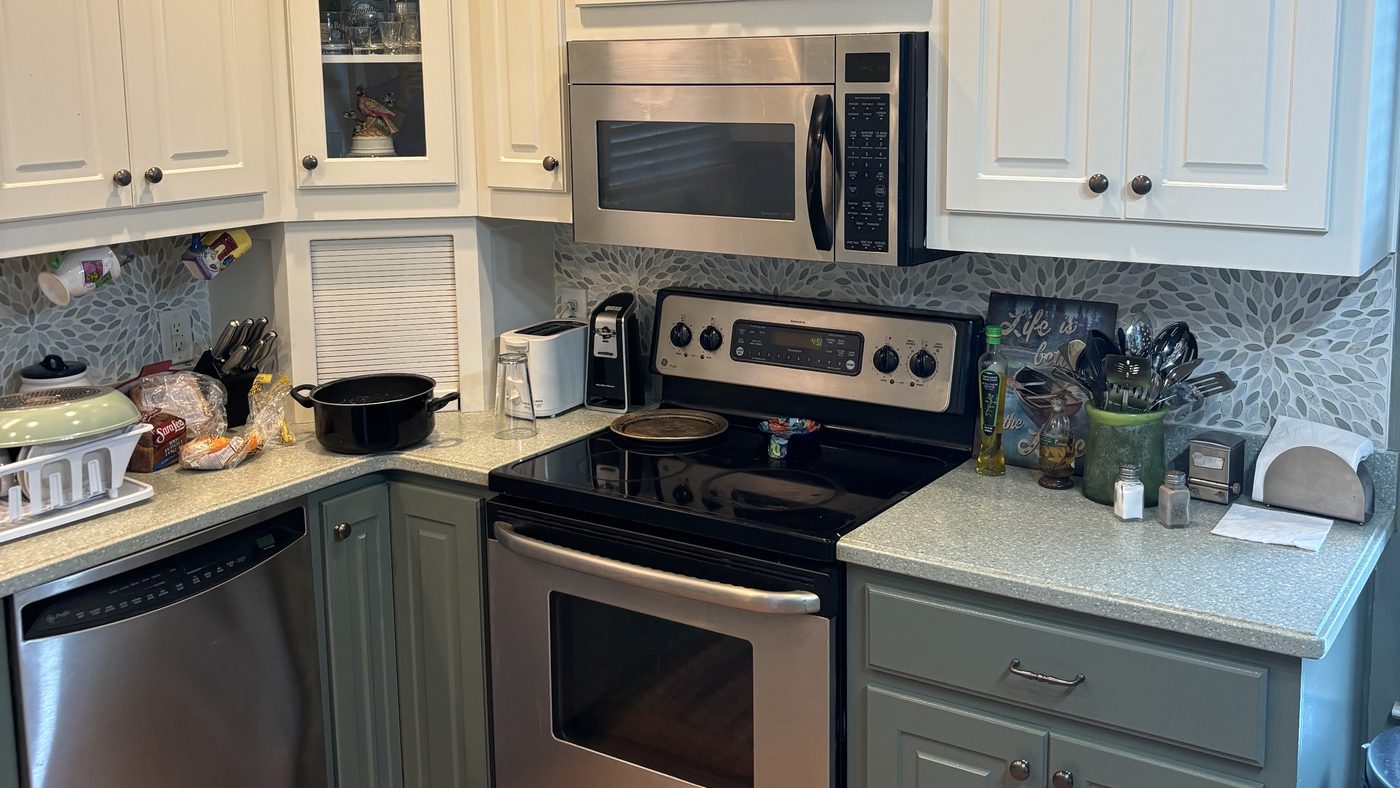
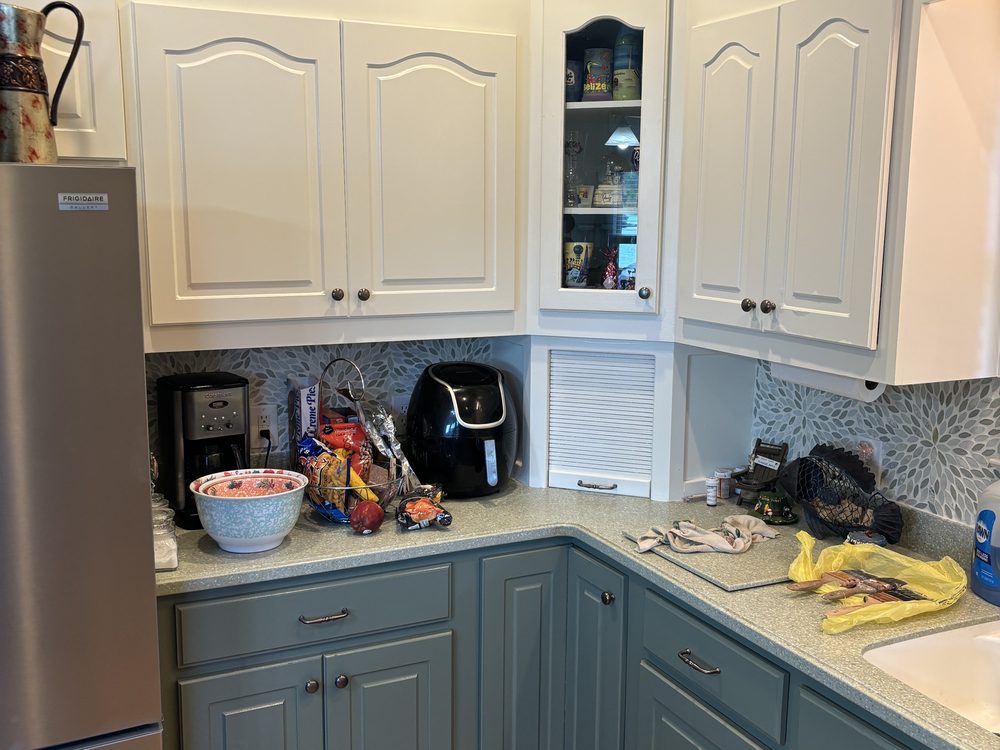
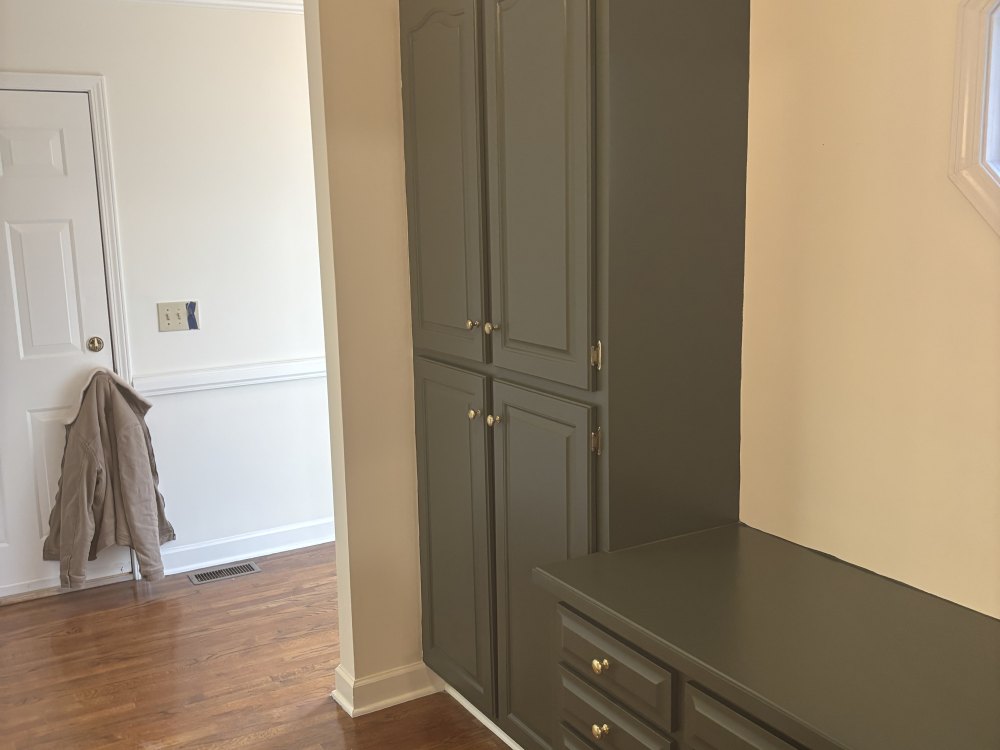
Kitchen and bathroom cabinetry refinished for homes across South Bend, Mishawaka, Granger, Osceola and Roseland, keeping the boxes that are already there and changing the part you actually look at.
Replacing a kitchen means tearing out boxes that are usually sound, working around a gap for weeks, and paying for carcasses you are going to hide behind doors anyway. Refinishing keeps the layout and the boxes and changes the doors, the drawer fronts and the color, which is the whole of what you look at.
What refinishes well, and what does not
Solid wood doors, wood veneer, and MDF doors with a painted or sealed factory finish all take a sprayed coating well. Oak refinishes beautifully, though its open grain stays visible through paint unless it is filled, and some people want that texture while others do not. We will show you what to expect before anything comes off.
Thermofoil and laminate need a closer look. Where a plastic film has lifted or bubbled at the edges, coating over it does not reattach the film, so we will tell you honestly what we think the result would be and let you decide. The same goes for a failed carcass, a sagging shelf or water damage under the sink: refinishing changes the surface, not the structure, so it is worth dealing with those first.
How the work is done
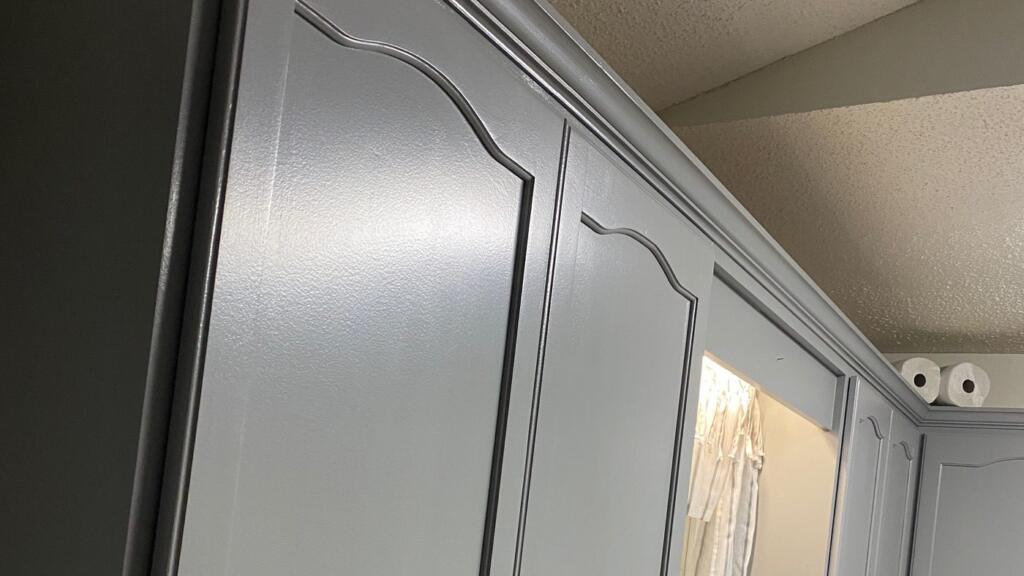
Doors and drawer fronts are removed, carefully prepared, and sprayed in a controlled setting before being reinstalled.
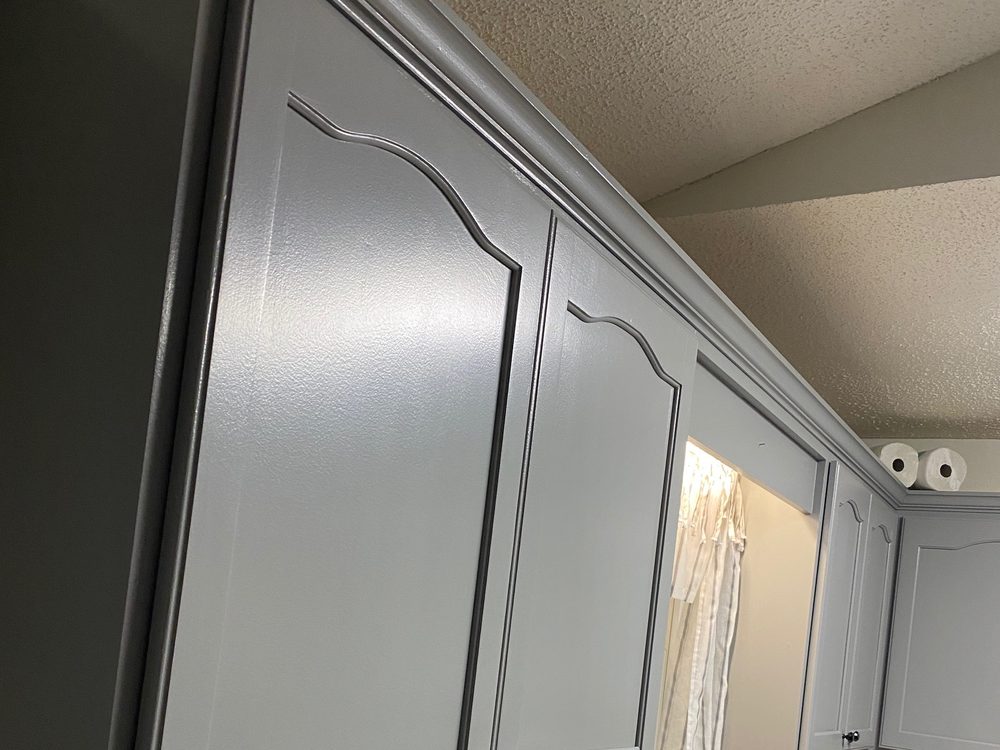
That sentence carries most of the difference between a cabinet job that looks factory-made and one that looks painted. A brushed cabinet door shows brush marks in exactly the place people examine most closely, at eye level and a foot away, and a door sprayed lying flat has no runs and no texture in it at all.
Everything comes off labeled so it goes back where it came from. Doors and drawer fronts are degreased first, because kitchen surfaces pick up cooking residue over the years and adhesion suffers if it is still there when the primer goes on. Then they are sanded or deglossed to give the surface a key, primed for adhesion, and sprayed.
The boxes and face frames stay in place and are prepared and coated in the kitchen, which is why the in-place work is the part you see happening and the spraying is not.
What it is like to live with
You will have open shelving for the days the doors are away, and we will tell you how many days that is when we quote. It depends on the number of doors and the state of their existing finish.
The kitchen stays usable throughout. Emptying the cabinets is not necessary, though clearing the countertops helps, and taking the contents out of a few base units near the work makes the in-place coating quicker.
A cabinet finish keeps hardening for a while after it looks dry. We will tell you when to put things back and when to stop being careful with the doors, and it is worth waiting: an early knock leaves a mark that a cured finish would have shrugged off.
Hardware and details
Existing hinges and handles can go back on, or new hardware can go on instead. If you are changing from knobs to pulls, or moving to a different hole spacing, that is worth deciding before we start, because filling and redrilling is much easier while the doors are off and unfinished.
What affects the price
The number of doors and drawer fronts, which matters far more than the size of the kitchen. The condition and type of the existing finish, how much degreasing and sanding it needs, whether the grain is being filled, the number of colors, and whether the interiors are being coated as well.
A two-tone kitchen, with the uppers one color and the base units another, is a common request and is priced on the extra setup rather than on the extra color.
We use Sherwin-Williams products. The estimate is free, and it is worth doing in person for cabinets, because the existing finish decides most of the work. Request an estimate, or read more about cabinet refinishing. You can also see interior painting in South Bend or everything we do in South Bend.