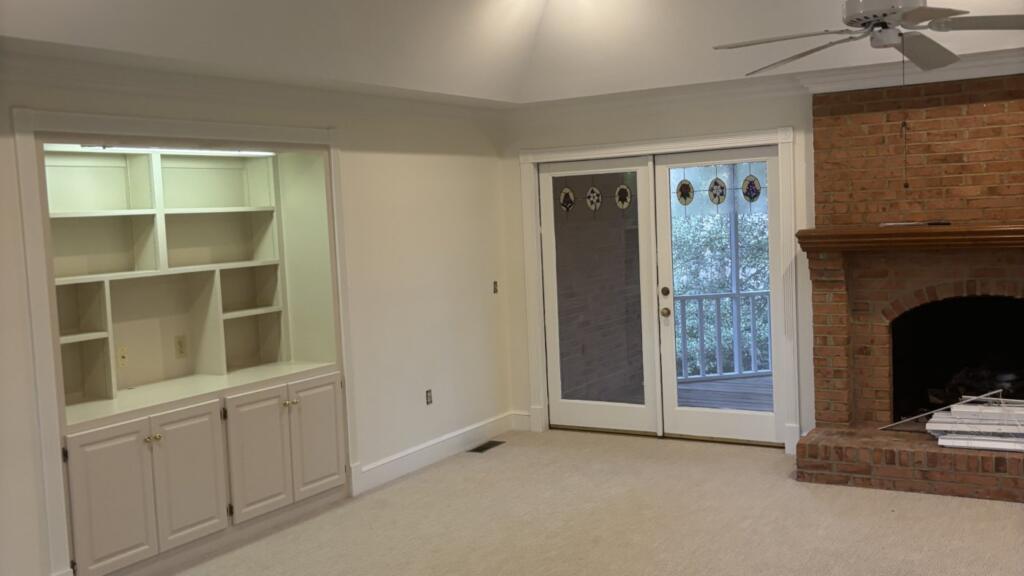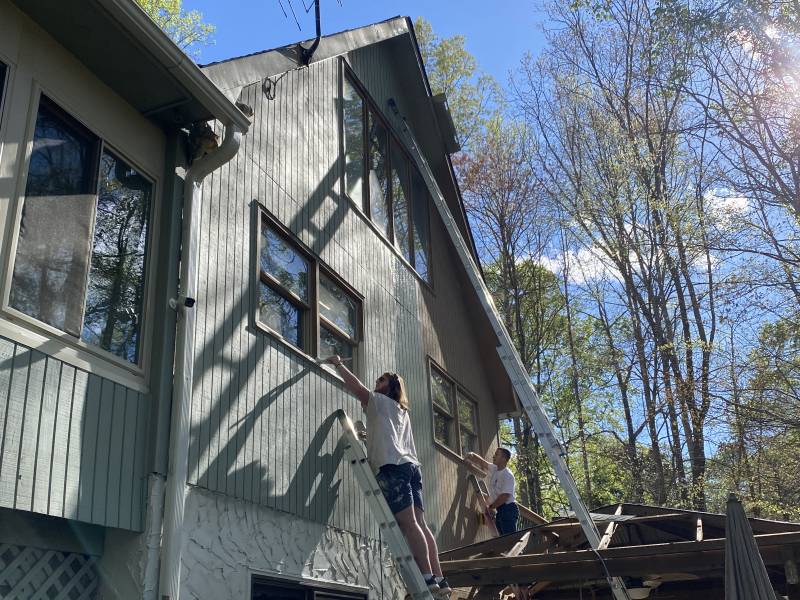
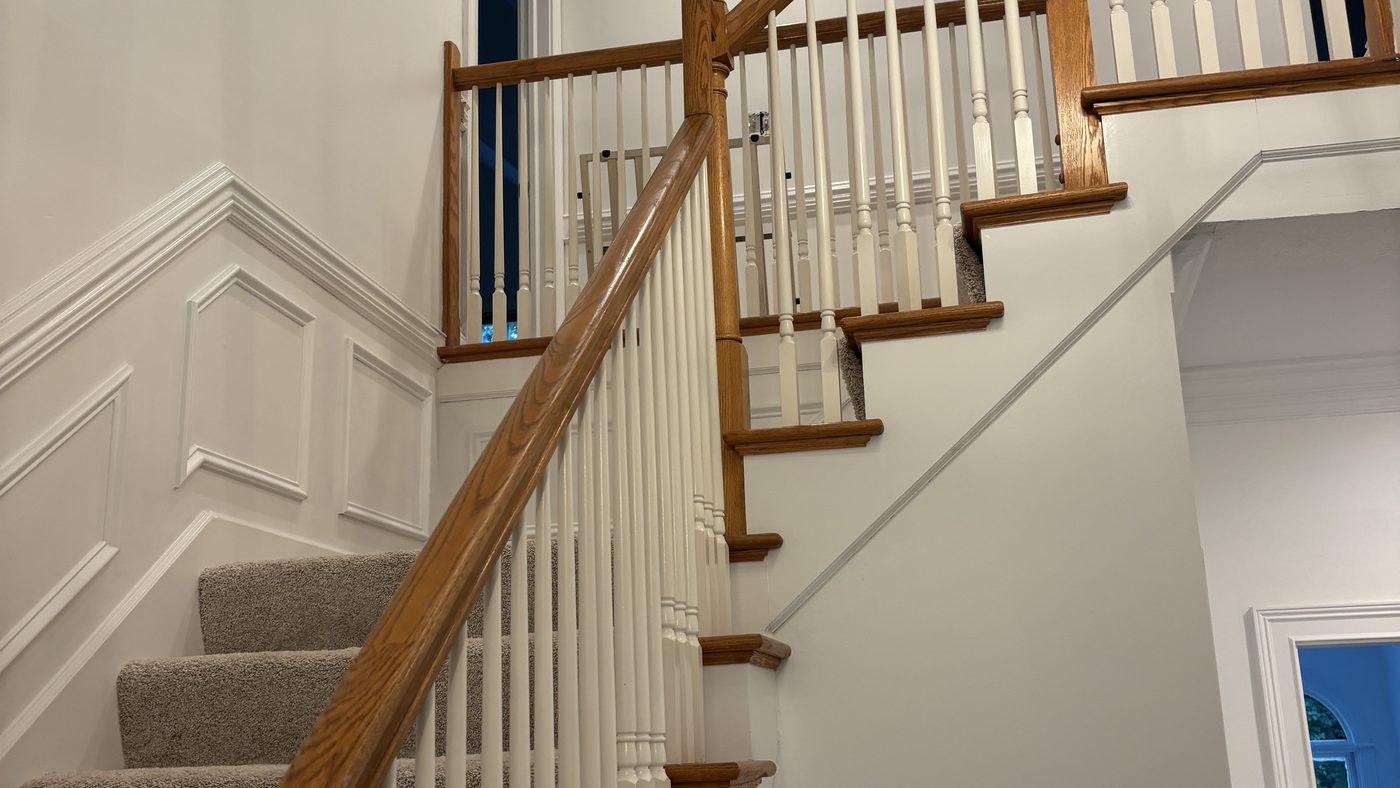
An entry hall and staircase in Granger, finished in white. The paneled wainscot, the crown molding and the stair strings were painted; the oak handrail was left stained.
A hall like this is almost entirely trim work, and trim is cut in by hand. There is no roller shortcut along a panel edge or against a stair string, which is why this is the slowest kind of interior job and the one people look at hardest afterwards.
How we paint an interior
The general process, on any house rather than this one. Furniture is moved clear and covered with plastic sheeting and the flooring is protected before anything is opened. Then the walls get looked at: nail pops, cracks, old repairs and anything soft. Patches are filled, sanded and primed rather than painted straight over, because a repair that was only painted over reappears the first time low light comes across the wall.
Cutting in comes before rolling, trim after walls, and each coat is allowed to dry rather than being chased. At the end we walk the finished work with you before anything is put back.
What to expect if you want this
An entry and stairwell is a space the whole household walks through, so the job is planned around that rather than around us: which part is out of use, when, and how the stairs stay usable in the meantime. Tell us at the estimate if there are hours the hall has to be clear.
The price follows the amount of trim more than the square footage. A room with four walls and a door is quick; a hall with wainscot, crown molding, spindles and a run of stairs is a week’s worth of edges in the same floor area, which is exactly the thing that cannot be judged over the phone.